The MyGenom Project is an effort to understand the genetic makeup of Malaysians. It’s our country’s first large-scale study of population genomics, which means sequencing the DNA of Malaysian citizens from different races and ethnicities. In Phase I, 2,400 genomes will be sequenced from healthy Malaysian individuals, with the goal of reaching 10,000 genomes in Phase II. Over time, this project will create a genomic dataset that reflects the diversity of our population and will be the key to bringing Precision Medicine to Malaysia.
The diversity of the human population means we have a variety of different characteristics and traits, and most of these can be traced back to the composition of our genes and DNA. This also means that people from different countries with different ethnic groups would differ from Malaysians; something that is readily apparent to all of us .These phenotypic characteristics range from height, skin colour, hair colour, cognitive abilities, personality traits, propensity for non-communicable diseases (NCDs), metabolism of food/drugs, and many more.
The project aims to define the genomic “baseline” of the Malaysian population i.e., provides a reference genomic dataset that represents the diversity of the Malaysian population. By understanding the genetic variations of the Malaysian individuals from different ethnic groups, we can confidently identify genetically linked disease-associated mutations, especially those on non-communicable diseases. Thus, implementing precision medicine within the healthcare system and initiating the development of a Precision Medicine Ecosystem in Malaysia (in the near future).
By understanding the unique genetic makeup of Malaysians, we can enhance medical care and prevent diseases more effectively. Knowing the common genetic differences among Malaysians can make it much easier and faster to diagnose rare genetic diseases, especially for patients in Malaysia. This is particularly important for newborns and young children who are seriously ill but don’t yet have a clear diagnosis. With this information, doctors can provide the right treatment sooner, potentially saving lives.
Additionally, understanding genetic risks for common diseases can help people make smarter health choices. For example, they might decide to visit the doctor more often, choose the right medication, or adjust their diet, lifestyle and exercise based on what works best for their genetic makeup. This can help prevent diseases like diabetes, cancer, and Alzheimer’s, making it easier to stay healthy.
The MyGenom project is an inter-ministry collaboration, primarily between the Ministry of Science, Technology, and Innovation (MOSTI) and the Ministry of Health (MOH). The executing project teams are from the National Institutes of Biotechnology Malaysia (NIBM) for MOSTI, and from the National Institutes of Health (NIH) from MOH.
Our body is made of 10 to 100 trillion cells. Hidden inside almost every cell in our body is a chemical called DNA. Genome is the entire set of genetic information found in cells.
The genome provides all the information needed for us to grow and function, as well as determining some of our features, such as eye colour, hair colour and height. Among humans, although the DNA is 99.9% similar, a variation of only 0.1% can make a lot of differences.
And thus, genomics is an area within biology that focuses on genome structure, evolution, function and mapping. It involves the comprehensive study of the entire genetic material of organisms (the genome), including all genes at the DNA level, as well as the cellular or tissue level, to understand how genes and their interactions contribute to various biological functions and traits.
Sequencing is the process of determining the complete DNA sequence of an organism’s genome. This includes identifying the precise order of nucleotides (building blocks) within a DNA molecule. By mapping out the entire genome, researchers can gain detailed insights into the genetic makeup of an organism, which can be used for various applications such as studying evolutionary history, strategising prevention and screening programs based on genetic evidence, and also developing and choosing the most effective treatment to achieve precision medicine.
Precision medicine is a concept that involves tailoring medical treatment to the characteristics of each patient. Instead of using a one-size-fits-all approach, it considers factors like a person’s genes, environment, and lifestyle to provide more effective care. In the context of genes and genetics, people from different ethnic backgrounds can have different genetic variations that affect their health. For example, certain genetic traits are more common in specific ethnic groups, which can influence how prevention and surveillance of diseases are being carried out. In cancer, differences in genetic factors may lead to different responses to targeted therapies. Precision medicine takes these differences into account, aiming to provide the most effective treatment for each person.
Precision medicine can be applied to the individual via means of specific screening e.g. testing for genetic markers, but the observations made of specific ethnic ancestries can be generally applied for all of its members. For example, the dosage for warfarin , the most commonly prescribed anticoagulant, is significantly different between Caucasian (requiring the highest mean daily dose) and Asian patients (the lowest mean daily dose). This fact informs how patients of different ancestries will be prescribed different dosages of warfarin to ensure maximal effectiveness.
While this example still remains true to date, advancements in genomic studies nowadays have revealed that while individuals of the same ethnicity may have more similarities in genetic background, they may still be different in disease-related genetic factors and sometimes disease-related genetic factors are also commonly shared among individuals of different ethnicities (for example, genetic factors that influence the lifetime risk of developing breast cancer). In view of this, the MyGenom study is designed to be inclusive and able to capture the diverse genetic landscape of Malaysia. It will serve as a cornerstone for future studies to investigate the risks of diseases, drug efficacy and potential side effects as well as to develop guidelines that ensure more effective disease prevention and treatment for all Malaysians, though we may have different disease-associated genetics, lifestyle, and socioeconomic status.
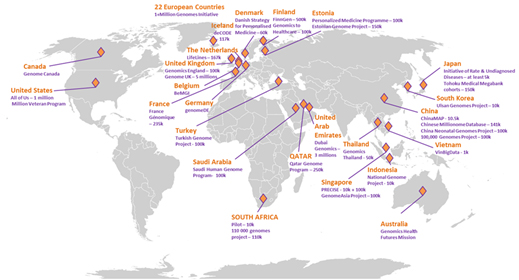
Yes, many countries all around the world have similar population genomics initiatives. For examples, Vietnam had sequenced 1,000 individuals while South Korea had sequenced 10,000 individuals. Singapore is moving towards sequencing 500,000 (in their Phase III), while Japan is expanding to at least 150,000 individuals. Countries in the Europe, United States, United Kingdom, and United Arab Emirates are heading towards generating millions of genomes for their populations.